Description
Copper is a component of many enzymes in plants; it stabilizes pigments, thus promoting photosynthesis; it participates in cell wall lignification; it affects pollen formation; and it influences carbon and nitrogen metabolism.
Through citric acid, it fully chelates metal elements with organic active substances, exhibiting moderate chelation strength. This allows for the slow release of citric acid, metal ions, and organic active substances within the plant, resulting in a significant slow-release effect and high absorption and utilization rate.
With a copper content (>20%) higher than EDTA copper sodium, the required dosage can be reduced by 30%. It boasts high effective components, low molecular weight, and easier absorption, making it an ideal substitute for EDTA copper sodium.
The slow-release of citric acid and organic active substances can regulate the soil pH to a slightly acidic level, promoting a soil environment conducive to beneficial microbial activity, forming good soil aggregate structure, and significantly improving soil quality.
All raw materials used are food-grade, with low heavy metal content, posing no harm to the environment. It is non-toxic, harmless, and environmentally friendly.
Product Quality Indicators
| Project | Index | Project | Index |
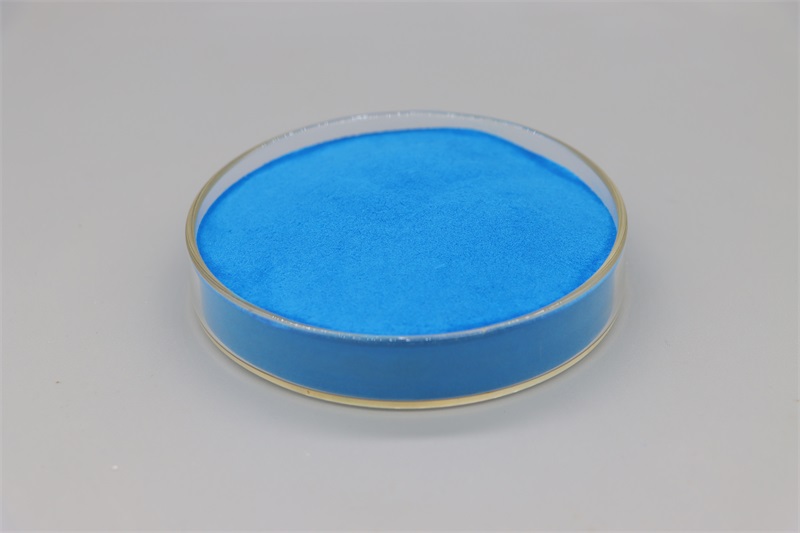
| Appearance | blue powder | Copper content | ≥20.0% |
| pH value | 7.0~9.0 | Water-soluble | Fully water-soluble |
| Water-insoluble matter | ≤0.1% | lead | ≤10ppm |
| arsenic | ≤3ppm | Packaging specifications | 25kg |
Application Characteristics
As a micronutrient supplement, it is used in agriculture, forestry, animal husbandry, and other economic crops. It can be widely applied in water-soluble fertilizers, foliar fertilizers, organic fertilizers, compound fertilizers, and plant nutrient fortifiers.
Foliar spray: Dilute 2000-3000 times, spray 2-3 times consecutively, with an interval of 10-15 days between each application.
Drip irrigation/fertigation: 200-300 grams per acre